EFL069

For our 69th episode, we review a paper in The Journal of Clinical Endocrinology & Metabolism on the gut microbiome of adolescents with type 1 diabetes, which hopes to understand differences between those with a normal body mass index compared to obesity. Studying gut microbiomes has been a “hot topic” for several years now, and we are excited to take the opportunity to unpack this work and see how it helps us better understand our patients. We both work through the challenges that come with any observational study and learn more about the specific techniques used by these investigators in this study. Host Chase Hendrickson, MD, MPH, MHCC, from Vanderbilt University talks with regular contributor Ashok Balasubramanyam, MD, from Baylor College of Medicine, and guest expert Åke Lernmark, MD, PhD, professor emeritus from Lund University in Malmö, Sweden. They discuss “Gut Microbial Changes Associated With Obesity in Youth With Type 1 Diabetes” by Ismail et al, published in the February 2025 issue of JCEM.
Meet the Speakers
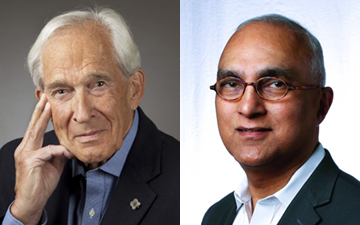
Åke Lernmark, MD, PhD, is professor emeritus from the Department of Clinical Sciences at Lund University Clinical Research Centre and Skane University Hospital in Malmö, Sweden. He has researched islet cells and type 1 diabetes since medical school at Umeå University. His postdoc work was with Donald F. Steiner, MD, in 1974, and he was a professor at the University of Chicago in 1975. In 1980, Dr. Lernmark became the director of research of the Hagedorn Research Laboratory in Gentofte, Denmark. In 1989, he was named R.H. Williams Professor in Medicine at the University of Washington in Seattle. He was the principal investigator of the Swedish site in The Environmental Determinants of Diabetes in the Young (TEDDY) study from 2002–2025. In 2010, he became a professor of experimental diabetes research at Lund University. Dr. Lernmark’s laboratory cloned the Human Leukocyte Antigen - DQ and discovered the first islet autoantigen, 64K protein, later found to be a novel isoform of glutamic acid decarboxylase (GAD65) in human β cells. In 1984, Dr. Lernmark used in vitro transcription translation to develop the gold standard GADA assay. This standard is still in use.
Ashok Balasubramanyam, MD, professor of medicine in the Division of Endocrinology, Diabetes and Metabolism at Baylor College of Medicine, received his clinical and research training at Baylor and at the Massachusetts General Hospital in Boston. He serves as vice president for academic integration at Baylor and chief academic officer of Baylor-St. Luke’s Medical Center. Dr. Balasubramanyam holds the Rutherford Chair in Diabetes Research, and his team identifies and characterizes atypical forms of diabetes and disorders of adipose tissue. He is a principal investigator of RADIANT (Rare and Atypical Diabetes Network), a consortium funded by the National Institutes of Health to discover new forms of diabetes. He has been deeply involved in education at every level of clinical and research training and currently serves as director of Baylor’s Clinical Scientist Training Program. Dr. Balasubramanyam is the immediate past chair of the American Board of Internal Medicine - Endocrinology, Metabolism and Diabetes Board.
Everything said on the podcast represents individuals’ opinions only and not those of the participants’ institutions or of the Endocrine Society.
Resources
Meet the Host
 Chase Hendrickson, MD, MPH, MMHC, practices general endocrinology at the Vanderbilt University Medical Center, where he is an associate program director for the endocrinology fellowship program. His interests include endocrine education, teaching inferential methods, and quality improvement.
Find us on the following streaming services:Subscribe