EFL Episode 078

For our 78th episode, we review a recent Journal of the Endocrine Society (JES) article reporting results from a Phase 2, single-dose trial of an SGLT1 inhibitor for post-bariatric hypoglycemia. This condition can be particularly difficult to diagnose and manage, and current treatments are not uniformly effective or well tolerated, with no FDA-approved therapy currently available. The study explores whether targeting intestinal glucose absorption could offer a new oral treatment option, while raising important questions about patient selection, clinically meaningful outcomes, and what a larger Phase 3 trial will need to demonstrate. Host Chase Hendrickson, MD, MPH, MHCC, from Vanderbilt University talks with regular contributor Steven D. Wittlin, MD, from the University of Rochester Medical Center, and guest expert Sangeeta Kashyap from Weill Cornell Health. They discuss a study by Lawler et al., published in the August 2026 issue of JES titled, “A single dose trial of mizagliflozin for the treatment of postbariatric hypoglycemia.”

Regular Contributor
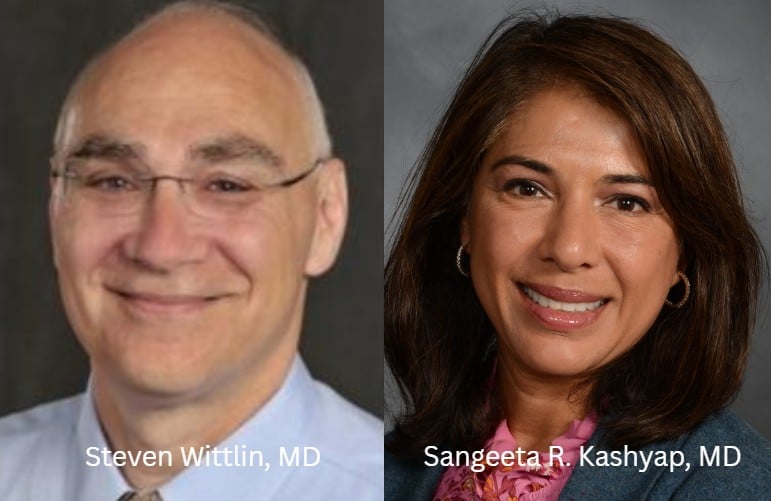
Steven Wittlin, MD
University of Rochester School of Medicine and Dentistry
Steven Wittlin, MD, received his medical degree from Sackler School of Medicine, Tel Aviv University, and completed his residency, including serving as chief resident, at Booth Memorial Medical Center in New York. Dr. Wittlin completed his fellowship at New York University. He is a past chief of endocrinology and assistant chairman of medicine at Booth Memorial Medical Center. Currently, he has been professor of medicine at the University of Rochester School of Medicine and Dentistry for more than 26 years. There he also serves as director of diabetes services and clinical director of the Endocrine-Metabolism Division at the University of Rochester Medical Center. Dr. Wittlin’s research interests include diabetes, diabetes technology, and innovative treatments for diabetes. He has published numerous peer-reviewed articles and book chapters and received several teaching awards.
Guest Expert
Sangeeta R. Kashyap, MD
Weill Cornell New York Presbyterian Hospital
Dr. Sangeeta Kashyap is a physician-investigator and clinical leader with extensive experience in cardiometabolic medicine, diabetes, obesity, and translational research. She has led NIH-funded multicenter clinical trials, including the landmark STAMPEDE and ARMMS-T2D studies, investigating the long-term metabolic and cardiovascular implications of metabolic surgery compared with medical therapy.
Her research focuses on the intersection of obesity, insulin resistance, type 2 diabetes, and cardiovascular-kidney-metabolic (CKM) disease, with particular interests in precision metabolic medicine, incretin-based therapies, MASLD/MASH, and strategies to improve cardiometabolic outcomes. She has collaborated with investigators at Houston Methodist on research examining real-world utilization of cardioprotective therapies in patients with type 2 diabetes and established cardiovascular disease.
In her leadership role at Weill Cornell Medicine, Dr. Kashyap oversees clinical program development, multidisciplinary care initiatives, and clinical research expansion. She is particularly interested in developing an integrated cardiometabolic center that brings together endocrinology, cardiology, nephrology, and hepatology to advance multidisciplinary care, collaborative clinical trials, and precision approaches to cardiometabolic disease.
 Chase Hendrickson, MD, MPH, MMHC, practices general endocrinology at the Vanderbilt University Medical Center, where he is an associate program director for the endocrinology fellowship program. His interests include endocrine education, teaching inferential methods, and quality improvement.